
We all need to belong. Connection is not a luxury. It is a fundamental human need. True belonging does not require us to change who we are but makes room for us to be ourselves.
For children removed from their families and placed in alternative care, belonging can feel especially fragile. They focus on fitting in. On surviving.
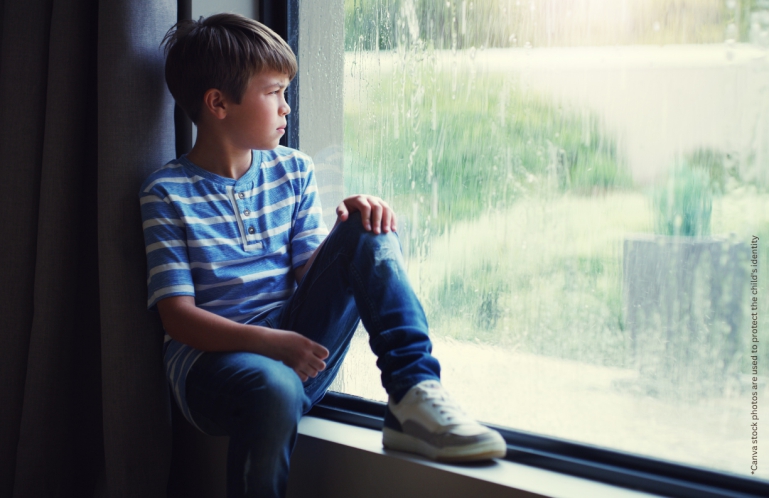
When the new social worker first met Jake* at the Children’s court, he stood quietly beside a caregiver. Careful not to draw too much attention. Children who move from place to place often learn to adapt quickly. They read the room. They adjust. Around Jake, adults held thick files filled with reports, concerns, and opinions. Before opening his file, the social worker greeted him in his home language. Jake looked up, surprised, and almost seemed to relax a bit.
Inside the courtroom, the children’s home described their difficulty in supporting him. The foster parent told how she couldn’t manage another day. When the magistrate eventually asked Jake why he thought this was happening, he said softly: “Sometimes I do things, and afterward, I don’t know why.”
When belonging feels uncertain, behaviour becomes its language. What looks like defiance is often a question: “Do I still have a place? If you see my hardest parts, will you still choose me?”
In the days that followed, calls were made and options explored. Some had no space. Others were not willing to make space. Each “no” reinforced what Jake feared – “Maybe I am too much. Maybe I do not fit anywhere.”
The social worker persisted. She returned to court again and again, searching for more than a temporary solution. Her steady presence carried a simple message: You matter.
Eventually, she reached the boy’s biological mother. Years earlier, Jake had been removed from her care due to instability. She had remained in contact but had not realised how much Jake was struggling. In the meantime, she had rebuilt her life in another province. A new marriage, a young daughter, greater stability.
The conversation began cautiously and slowly opened up. She was told how, with every move to a new placement, Jake had asked for his mother. Although reunification remains a core focus of social workers, such conversations do not always lead to it. Sometimes circumstances change. Sometimes people grow. Sometimes support can be built around a family to support them when reunification is possible.
There was regret in her voice, but also determination. The next day, the social worker received a WhatsApp message with a screenshot of a plane ticket.
On Monday morning, Jake stood outside the courthouse holding his mother’s hand. He leaned slightly toward her. With the Children’s Court’s guidance and coordinated support, he left with her that day. A school was ready to receive him. A uniform was waiting.
Although finding a place to belong does not make problems disappear overnight, there is still work ahead. Counselling will continue. There will likely be adjustments and difficult conversations ahead. The social worker continues to follow up and will make referrals where necessary. Belonging, however, is the foundation on which healing can grow. It fosters a safe environment where trust can gradually grow, and through genuine acceptance, even wounded hearts can start to believe in hope once more.
*Name changed
0 Comments