
by Anneke Steyn | Jul 17, 2026 | Stories of Hope, Support
When the Map Changes
Christine Shaw
Life did not unfold the way anyone imagined it would for *Mia, *Hannah, and *Joshua.
Although they came from different biological families, the three children were adopted together while they were still young. They found a home to call their own and parents who hoped to give them the love, stability, and opportunities every child deserves. Over time, they became a family, and for a while it seemed that life was finally moving in the right direction.
Then the map began to change.
Mia, the eldest, struggled with emotions she often could not understand or express. Her pain eventually became so overwhelming that she was placed in foster care. The separation was heartbreaking. While Hannah and Joshua remained with their adoptive parents, the three siblings had to grow up on different paths. Yet the bond they had formed through their shared childhood endured.
The years that followed brought even greater change. The children were homeschooled, and after their adoptive mother passed away, grief reshaped every aspect of family life. Mia, who was already18 at the time and no longer in foster care, moved back to help their adoptive father. He continued to care for her adopted siblings with dedication, but simply getting through each day became the priority. Consequently, schoolwork, routines, and long-term planning gradually slipped into the background, leaving significant educational gaps.
Amid the uncertainty, a new opportunity emerged. Plans were made for the children to relocate abroad, where their adoptive father had family connections. They dreamed of new schools, new friendships, and the chance to begin again.
Then tragedy struck once more.
Before those plans could become reality, their adoptive father also passed away, leaving the three young people facing an uncertain future yet again.
Family friends opened their home to the two younger children while longer-term arrangements were made. By then, the educational setbacks had become too significant to ignore. Assistance was sought through the Department of Social Development, and the matter was referred to CMR Gauteng-East.
Today, Mia’s story is one of resilience and determination. As a young adult, she returned to her studies through a private college and successfully completed her schooling, standing as a testament to the power of perseverance and the belief that the past does not have to define the future.
Meanwhile, Hannah and Joshua have been placed in a youth care centre where they receive the structure, support, and educational assistance they need. Catching up after years of disruption is a daunting challenge, but their future has once again become the focus.
Social workers, caregivers, and support staff continue to stand by their side, helping them build the skills, confidence, and educational foundation they need for adulthood. Statutory support, however, extends only until they turn 18, leaving a vital gap before they are truly ready for the world. The hope is that additional support will enable them to continue receiving the care, guidance, and opportunities they need until the age of 21, giving them the best possible chance to prepare for independent living.
Their story reminds us that when people come together around a child, possibilities begin to grow where limitations once existed. Hope does not always arrive as a miracle. Sometimes it comes in the form of a safe place to stay, someone who believes in you, or simply another chance to begin again.
Their story is still being written.
There are still challenges ahead, but there is also hope. Hope in every exam passed. Hope in every new skill learned. Hope in every opportunity embraced, and in every person willing to journey with them. Because when life changes the map, it doesn’t have to end the journey. Sometimes, it simply marks the beginning of a new path. A path made possible because others choose to walk alongside you.
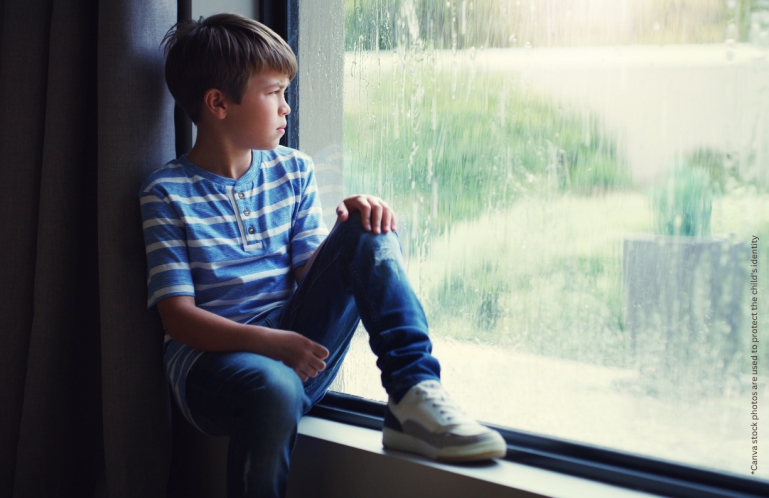
*Names have been changed to protect the children.
by Christine Shaw | Apr 21, 2026 | Stories of Hope
We all need to belong. Connection is not a luxury. It is a fundamental human need. True belonging does not require us to change who we are but makes room for us to be ourselves.
For children removed from their families and placed in alternative care, belonging can feel especially fragile. They focus on fitting in. On surviving.
When the new social worker first met Jake* at the Children’s court, he stood quietly beside a caregiver. Careful not to draw too much attention. Children who move from place to place often learn to adapt quickly. They read the room. They adjust. Around Jake, adults held thick files filled with reports, concerns, and opinions. Before opening his file, the social worker greeted him in his home language. Jake looked up, surprised, and almost seemed to relax a bit.
Inside the courtroom, the children’s home described their difficulty in supporting him. The foster parent told how she couldn’t manage another day. When the magistrate eventually asked Jake why he thought this was happening, he said softly: “Sometimes I do things, and afterward, I don’t know why.”
When belonging feels uncertain, behaviour becomes its language. What looks like defiance is often a question: “Do I still have a place? If you see my hardest parts, will you still choose me?”
In the days that followed, calls were made and options explored. Some had no space. Others were not willing to make space. Each “no” reinforced what Jake feared – “Maybe I am too much. Maybe I do not fit anywhere.”
The social worker persisted. She returned to court again and again, searching for more than a temporary solution. Her steady presence carried a simple message: You matter.
Eventually, she reached the boy’s biological mother. Years earlier, Jake had been removed from her care due to instability. She had remained in contact but had not realised how much Jake was struggling. In the meantime, she had rebuilt her life in another province. A new marriage, a young daughter, greater stability.
The conversation began cautiously and slowly opened up. She was told how, with every move to a new placement, Jake had asked for his mother. Although reunification remains a core focus of social workers, such conversations do not always lead to it. Sometimes circumstances change. Sometimes people grow. Sometimes support can be built around a family to support them when reunification is possible.
There was regret in her voice, but also determination. The next day, the social worker received a WhatsApp message with a screenshot of a plane ticket.
On Monday morning, Jake stood outside the courthouse holding his mother’s hand. He leaned slightly toward her. With the Children’s Court’s guidance and coordinated support, he left with her that day. A school was ready to receive him. A uniform was waiting.
Although finding a place to belong does not make problems disappear overnight, there is still work ahead. Counselling will continue. There will likely be adjustments and difficult conversations ahead. The social worker continues to follow up and will make referrals where necessary. Belonging, however, is the foundation on which healing can grow. It fosters a safe environment where trust can gradually grow, and through genuine acceptance, even wounded hearts can start to believe in hope once more.
*Name changed

by CMR@dmin | Jul 23, 2021 | Stories of Hope
This is a story of a mother who was willing to give up a nasty habit and a person dragging her down to live for her son.
As a young social worker, relatively new in the field, my perception was that once people are “marked” as bad, especially those dependent on drugs, they are not likely to improve their circumstances.
Our office received a phone call from concerned grandparents and parents. The biological parents of a small child were staying on the premises of the parents of the biological father. The grandparents of this child were concerned about his safety because the parents were using drugs and have been using drugs on and off for the last 10 years. The biological parents have been in a committed relationship throughout their drug use.
The grandparents would let the child stay with them during the nights but during the daytime, the child would be with his mother- whether she was high or not. The concern of the grandparents was that this child is being exposed to a lifestyle that is not appropriate and is exposed to living circumstances that are unhygienic and not safe, never the less for the child but for anyone around.
When I, the social worker, arrived at the premises, the grandparents were shaken and scared. My colleague and I assured the grandparents that if they are able to take care of the child, we would place the child in their care. We also assured them that we need to deliver preventative services and we use our professional discretion to act in the best interest of the child. We found that the grandparents were able and capable of looking after this child.
As soon as we met with the biological mother, we could see that she was coming down from a high. She was shaking and crying and begging us not to take her child. We explained the seriousness of the situation and how dangerous these circumstances were for this small child. We entered the house. It was dark, smelly and extremely dirty. Clothes were lying everywhere, cigarette buds lay strewn around and amidst all this mess, there the child was sitting and playing. Oblivious to what was going on around him.
I drafted a letter that gave the paternal grandparents custody over the child until this mother could get her act and her life back together. This mother was given time to clean up the house as a first step towards proving that she wants to be the mother she can be for this small boy. The boy was safe and cared for with his paternal grandparents and his mother could visit him at their house whenever she wanted. The biological father on the other hand was not willing to give up the drugs.
This mother decided that she needs the child in her life more than she does a drug user. She cleaned up her act and with the help of her mother and her parents in law she left a lifestyle of drugs and depending on a drug user behind.
We went for a home visit and saw that she was making slow progress and motivated her to keep going.
A week later, my supervisor phoned and said the following: “You won’t believe it. This house is so clean, it feels like I am in a hotel.”
This mom is still clean and ever so often when I drive by their yard, I see her and the boy playing outside.
We went for a few more home visits after that and all seemed well.
This is a story of a mother who was willing to give up a nasty habit and a person dragging her down to live for her son.
We are so proud of her and it is stories like this one that keeps us motivated and going in this profession that can sometimes be draining, overwhelming and sad beyond comprehension.

Recent Comments