
by Christine Shaw | Jul 13, 2026 | Stories of Hope, Support
A Story of Hope: When a child chooses hope.
By Christine Shaw
When *Tshepiso was eight years old, she learned that home could disappear overnight.
After her mother passed away, she moved into her aunt’s small house. The adults around her tried their best, but life often felt uncertain. Some days there was laughter around the table. Other days there were arguments, silence, and fear. Tshepiso carried a question inside her that no child should have to ask: Where do I truly belong?
As she grew older, she moved in with her sister and her sister’s boyfriend. At first, things seemed better. But slowly, the house became filled with shouting and violence. At night, Tshepiso lay awake listening to doors slam and angry voices echo through the walls. The fear followed her to school, where she had once been known as one of the brightest learners in her grade.
She dreamed of becoming a doctor. Science had once excited her, and teachers believed she had a promising future. But trauma is heavy, especially for a child carrying it alone. Her marks dropped, her confidence disappeared, and she failed Grade 10.
For a long time, Tshepiso believed failure meant she was no longer intelligent. She did not yet understand that pain can silence even the strongest mind.
One Sunday evening changed everything.
After returning from a leadership camp where she had proudly represented her school, Tshepiso arrived home to chaos. Her sister’s boyfriend shouted at her to leave and told her she would not sleep there that night. Frightened and heartbroken, she stood outside behind the house with nowhere to go.
In desperation, she called her social worker from CMR Gauteng East at the time.
Although it was late on a Sunday, her social worker came immediately.
That moment stayed with Tshepiso forever. Not because someone solved all her problems instantly, but because, for the first time in years, an adult made her feel safe. Someone listened. Someone came for her. Someone decided she mattered.
Tshepiso returned to stay with her aunt, and slowly, hope began rebuilding itself inside her. She repeated Grade 10 and changed her subjects, believing her original dream was gone. Yet she refused to stop trying.
Step by step, she focused on school again.
In 2020, she completed matric and achieved first position at her school. The girl who once believed she had failed at life suddenly remembered who she was. Opportunities followed as she was accepted at university with the help of another social worker, from CMR Gauteng East at the time, establishing a growing belief that her story was not ending in pain.
At the University of Johannesburg, Tshepiso studied social work. She worked hard and excelled academically, but more importantly, she discovered purpose. She wanted to become the kind of person who had once rescued her – a social worker who showed up when she as a child felt abandoned.
Years later, Tshepiso graduated.
Today, she works at one of the offices of the same organisation, CMR Gauteng East, that once protected her as a vulnerable child. Every day, she sits across from children carrying fear, grief, and uncertainty, and she reminds them gently that pain is not the end of their story.
Because she knows something they do not yet understand: That sometimes the child who survives the storm becomes the person who helps others find shelter.
* Pseudonym

by Christine Shaw | May 6, 2026 | Stories of Hope
*Jordan’s journey is a reminder that not every social work story ends in crisis. Some take time, persistence, and the right support, but they can lead to hope.
Several years ago, Jordan and his younger sister were removed from their mother’s care and placed in foster care. While his sister remained in a stable placement, Jordan’s path was more complex. After his first placement broke down, he spent time in a children’s home before moving to a second foster family.
This new placement brought opportunity, but it also revealed the depth of his trauma. Jordan struggled to adjust. Instead of his strengths being recognised – his intelligence and strong performance at school – the focus shifted to his behaviour.
He was frequently told that if he didn’t comply, he would be sent away or reported. Over time, he began to believe that everything going wrong around him was his fault.
This is not uncommon. Children who experience instability or prolonged stress often internalise blame. Research shows that when children lack consistent, reassuring relationships, they may assume responsibility for circumstances beyond their control. This can shape their self-worth, relationships, and behaviour for years to come.
At the same time, another story was unfolding.
Jordan’s father had spent six years trying to locate his children and re-establish contact. Living in another province, he eventually moved to Pretoria in the hope of being closer to them. Despite repeated attempts to arrange visits, communication with the children’s mother remained inconsistent. He was often told they were unavailable, away with friends, or staying over elsewhere, when in reality, they had already been removed from her care.
This reflects a lesser-discussed but deeply harmful dynamic: when a child’s relationship with one parent is disrupted or obstructed, whether intentionally or through breakdowns in communication. Even without clear intent, the result can resemble parental alienation – where a child grows up disconnected from a parent who is willing and able to be present. The emotional consequences of parental alienation can be significant. It often leads to depression, anxiety, low self-image, and the inability to build meaningful relationships as adults.
Toward the end of 2025, the father’s persistence began to pay off. With the support of the social workers of CMR Gauteng East, a reunification process was initiated. Services were put in place to support him, while careful planning ensured that Jordan’s needs remained central.
When the second foster placement broke down, it created both urgency and possibility.
Jordan expressed a clear desire to be reunited with his father. With the right preparation and support, that reunification became a reality.
On a quiet Friday morning, after years apart, father and son embraced again. Overwhelmed, relieved, and ready to begin anew.
Jordan’s story does not end here. Reunification is not a finish line, but the start of a new chapter. One that requires patience, consistency, and ongoing support.
But it is a powerful reminder that even in complex cases, after years of uncertainty, positive outcomes are possible.
Hope may take time, but it is always worth working toward.
(Name changed.)
Home » Archives for Christine Shaw
by Christine Shaw | May 6, 2026 | Stories of Hope
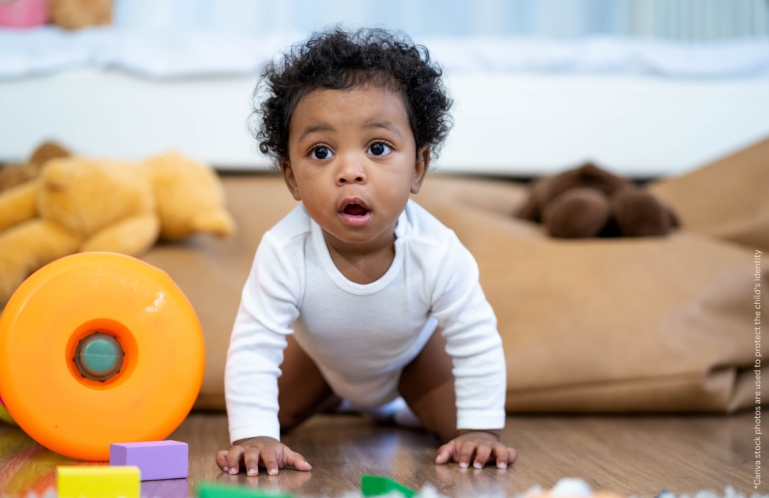
She holds the baby tight against her chest, longer than she can afford.
The morning air is cold. The brokenness inside her threatens to undo her. It feels as if it’s urging her to choose. Now or never.
The baby stirs softly, making a tiny sound, almost as if asking something. She closes her eyes, presses her cheek to the baby’s forehead. Something in her wants to remember that warm, soft feeling.
“I’m so sorry,” she whispers.
She wraps the blanket tighter around the small body. The house she chose is near the police station. Close enough, she hopes, for someone to reach her quickly. Someone who can give what she cannot.
Gently, she places the baby by the gate. Not because she doesn’t love her. But, because she does. Before she can change her mind, she walks away. Sometimes abandonment isn’t indifference. It’s desperation.
Elizabeth is late for work. She opens the gate, lost in thought, and then sees the bundle. At first, she thinks she’s imagining it. But it moves. There’s a sound.
She can’t believe her eyes. She drops her bag and kneels, pulling back the blanket. A baby girl blinked up at her, her cry faint but insistent. Everything around her seems to slow down.
With the baby in her arms, she rushes to the police station. The officer on duty doesn’t fully know the procedures. He only knows the baby must be safe. He takes her to a registered place of safety. When asked for the baby’s name, he hesitates, then says softly: *Tsholofelo. It means hope. Expectation.
A week later, the case is logged at one of CMR Gauteng-East’s offices.
The social worker realizes it will be a long process. Paperwork is missing. Steps have been skipped. She begins immediately. Forms, court orders, efforts to track the biological parents, and finding screened and approved adoptive parents. None is available on record.
Another organisation is contacted. They have a childless couple, already screened, and long waiting.
They do not hesitate.
The first meeting is gentle. Tsholofelo looked up with wide eyes, trying to figure them out. The woman held her softly. The man stayed close, speaking calmly.
It does not happen overnight. But it is a beginning.
Regular visits follow. Something starts to grow. Trust, recognition… a sense of belonging.
Tsholofelo is now nearly one year old, still in the place of safety. The paperwork is not complete. Court processes take time.
But she is no longer alone.
There are people who wait for her. With her. Who are learning her laugh, her small hands, the way she reaches out.
Tsholofelo’s story did not begin easily. With pain, uncertainty, and delays.
But it goes on, as her name promises: with hope. With expectation.
With the right support, the right people walking each step with her, there is a good chance that her first birthday, Tsholofelo will not only be safe…but home.
*Name changed
by Christine Shaw | Apr 21, 2026 | Stories of Hope
We all need to belong. Connection is not a luxury. It is a fundamental human need. True belonging does not require us to change who we are but makes room for us to be ourselves.
For children removed from their families and placed in alternative care, belonging can feel especially fragile. They focus on fitting in. On surviving.
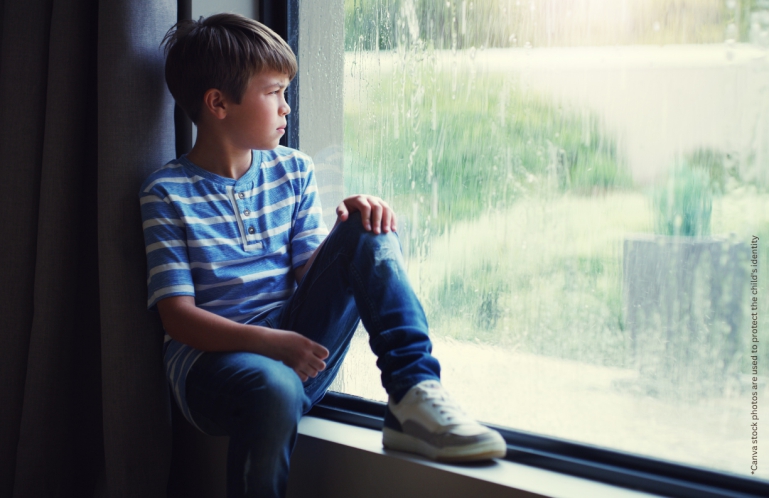
When the new social worker first met Jake* at the Children’s court, he stood quietly beside a caregiver. Careful not to draw too much attention. Children who move from place to place often learn to adapt quickly. They read the room. They adjust. Around Jake, adults held thick files filled with reports, concerns, and opinions. Before opening his file, the social worker greeted him in his home language. Jake looked up, surprised, and almost seemed to relax a bit.
Inside the courtroom, the children’s home described their difficulty in supporting him. The foster parent told how she couldn’t manage another day. When the magistrate eventually asked Jake why he thought this was happening, he said softly: “Sometimes I do things, and afterward, I don’t know why.”
When belonging feels uncertain, behaviour becomes its language. What looks like defiance is often a question: “Do I still have a place? If you see my hardest parts, will you still choose me?”
In the days that followed, calls were made and options explored. Some had no space. Others were not willing to make space. Each “no” reinforced what Jake feared – “Maybe I am too much. Maybe I do not fit anywhere.”
The social worker persisted. She returned to court again and again, searching for more than a temporary solution. Her steady presence carried a simple message: You matter.
Eventually, she reached the boy’s biological mother. Years earlier, Jake had been removed from her care due to instability. She had remained in contact but had not realised how much Jake was struggling. In the meantime, she had rebuilt her life in another province. A new marriage, a young daughter, greater stability.
The conversation began cautiously and slowly opened up. She was told how, with every move to a new placement, Jake had asked for his mother. Although reunification remains a core focus of social workers, such conversations do not always lead to it. Sometimes circumstances change. Sometimes people grow. Sometimes support can be built around a family to support them when reunification is possible.
There was regret in her voice, but also determination. The next day, the social worker received a WhatsApp message with a screenshot of a plane ticket.
On Monday morning, Jake stood outside the courthouse holding his mother’s hand. He leaned slightly toward her. With the Children’s Court’s guidance and coordinated support, he left with her that day. A school was ready to receive him. A uniform was waiting.
Although finding a place to belong does not make problems disappear overnight, there is still work ahead. Counselling will continue. There will likely be adjustments and difficult conversations ahead. The social worker continues to follow up and will make referrals where necessary. Belonging, however, is the foundation on which healing can grow. It fosters a safe environment where trust can gradually grow, and through genuine acceptance, even wounded hearts can start to believe in hope once more.
*Name changed
Home » Archives for Christine Shaw

Recent Comments