
by Anneke Steyn | Jul 17, 2026 | Stories of Hope, Support
When the Map Changes
Christine Shaw
Life did not unfold the way anyone imagined it would for *Mia, *Hannah, and *Joshua.
Although they came from different biological families, the three children were adopted together while they were still young. They found a home to call their own and parents who hoped to give them the love, stability, and opportunities every child deserves. Over time, they became a family, and for a while it seemed that life was finally moving in the right direction.
Then the map began to change.
Mia, the eldest, struggled with emotions she often could not understand or express. Her pain eventually became so overwhelming that she was placed in foster care. The separation was heartbreaking. While Hannah and Joshua remained with their adoptive parents, the three siblings had to grow up on different paths. Yet the bond they had formed through their shared childhood endured.
The years that followed brought even greater change. The children were homeschooled, and after their adoptive mother passed away, grief reshaped every aspect of family life. Mia, who was already18 at the time and no longer in foster care, moved back to help their adoptive father. He continued to care for her adopted siblings with dedication, but simply getting through each day became the priority. Consequently, schoolwork, routines, and long-term planning gradually slipped into the background, leaving significant educational gaps.
Amid the uncertainty, a new opportunity emerged. Plans were made for the children to relocate abroad, where their adoptive father had family connections. They dreamed of new schools, new friendships, and the chance to begin again.
Then tragedy struck once more.
Before those plans could become reality, their adoptive father also passed away, leaving the three young people facing an uncertain future yet again.
Family friends opened their home to the two younger children while longer-term arrangements were made. By then, the educational setbacks had become too significant to ignore. Assistance was sought through the Department of Social Development, and the matter was referred to CMR Gauteng-East.
Today, Mia’s story is one of resilience and determination. As a young adult, she returned to her studies through a private college and successfully completed her schooling, standing as a testament to the power of perseverance and the belief that the past does not have to define the future.
Meanwhile, Hannah and Joshua have been placed in a youth care centre where they receive the structure, support, and educational assistance they need. Catching up after years of disruption is a daunting challenge, but their future has once again become the focus.
Social workers, caregivers, and support staff continue to stand by their side, helping them build the skills, confidence, and educational foundation they need for adulthood. Statutory support, however, extends only until they turn 18, leaving a vital gap before they are truly ready for the world. The hope is that additional support will enable them to continue receiving the care, guidance, and opportunities they need until the age of 21, giving them the best possible chance to prepare for independent living.
Their story reminds us that when people come together around a child, possibilities begin to grow where limitations once existed. Hope does not always arrive as a miracle. Sometimes it comes in the form of a safe place to stay, someone who believes in you, or simply another chance to begin again.
Their story is still being written.
There are still challenges ahead, but there is also hope. Hope in every exam passed. Hope in every new skill learned. Hope in every opportunity embraced, and in every person willing to journey with them. Because when life changes the map, it doesn’t have to end the journey. Sometimes, it simply marks the beginning of a new path. A path made possible because others choose to walk alongside you.
*Names have been changed to protect the children.

by Christine Shaw | Jul 13, 2026 | Stories of Hope, Support
A Story of Hope: When a child chooses hope.
By Christine Shaw
When *Tshepiso was eight years old, she learned that home could disappear overnight.
After her mother passed away, she moved into her aunt’s small house. The adults around her tried their best, but life often felt uncertain. Some days there was laughter around the table. Other days there were arguments, silence, and fear. Tshepiso carried a question inside her that no child should have to ask: Where do I truly belong?
As she grew older, she moved in with her sister and her sister’s boyfriend. At first, things seemed better. But slowly, the house became filled with shouting and violence. At night, Tshepiso lay awake listening to doors slam and angry voices echo through the walls. The fear followed her to school, where she had once been known as one of the brightest learners in her grade.
She dreamed of becoming a doctor. Science had once excited her, and teachers believed she had a promising future. But trauma is heavy, especially for a child carrying it alone. Her marks dropped, her confidence disappeared, and she failed Grade 10.
For a long time, Tshepiso believed failure meant she was no longer intelligent. She did not yet understand that pain can silence even the strongest mind.
One Sunday evening changed everything.
After returning from a leadership camp where she had proudly represented her school, Tshepiso arrived home to chaos. Her sister’s boyfriend shouted at her to leave and told her she would not sleep there that night. Frightened and heartbroken, she stood outside behind the house with nowhere to go.
In desperation, she called her social worker from CMR Gauteng East at the time.
Although it was late on a Sunday, her social worker came immediately.
That moment stayed with Tshepiso forever. Not because someone solved all her problems instantly, but because, for the first time in years, an adult made her feel safe. Someone listened. Someone came for her. Someone decided she mattered.
Tshepiso returned to stay with her aunt, and slowly, hope began rebuilding itself inside her. She repeated Grade 10 and changed her subjects, believing her original dream was gone. Yet she refused to stop trying.
Step by step, she focused on school again.
In 2020, she completed matric and achieved first position at her school. The girl who once believed she had failed at life suddenly remembered who she was. Opportunities followed as she was accepted at university with the help of another social worker, from CMR Gauteng East at the time, establishing a growing belief that her story was not ending in pain.
At the University of Johannesburg, Tshepiso studied social work. She worked hard and excelled academically, but more importantly, she discovered purpose. She wanted to become the kind of person who had once rescued her – a social worker who showed up when she as a child felt abandoned.
Years later, Tshepiso graduated.
Today, she works at one of the offices of the same organisation, CMR Gauteng East, that once protected her as a vulnerable child. Every day, she sits across from children carrying fear, grief, and uncertainty, and she reminds them gently that pain is not the end of their story.
Because she knows something they do not yet understand: That sometimes the child who survives the storm becomes the person who helps others find shelter.
* Pseudonym

by CMR@dmin | Nov 10, 2022 | Support
Is uncontrollable behaviour in children increasing in communities?
Children must be seen and not heard. Long ago this was the norm and parents applied it daily. Today’s trends are not the opposite, but a very different understanding of how children should behave, or how to educate children. Schools and teachers are easily blamed for lack of discipline; but what does the child’s discipline look like at home?
Are there any rules set and clear guidelines given within which the child knows he must behave? Does the child understand the difference between acceptable and unacceptable behaviour? Or does the child present with negative- or uncontrollable behaviour? Henda van der Merwe, director of CMR Gauteng East, points out that the child protection organisation, with more than 30 social workers in its employ, has seen a large increase in children with uncontrollable behaviour in the last year.
“Our statistics show a 77% increase in these cases – which crosses all cultural boundaries, it is not related to one geographical area, or cultural group, or age group.”
But what is uncontrollable behaviour – and what are the causes that result from it? Children who react with anger, bully others, or physically attack others, are out of control. Likewise, children who bully others on digital media. “It is a shame that these platforms have become an additional way for people to attack each other and hurt each other emotionally. The fact that it happens digitally means it’s faceless and easier to do,” she explains. Uncontrollable behaviour refers to a pattern of behavioural outbursts.
The question also exists: what role does the use of habit-forming substances such as alcohol and drugs play in this behaviour? Marijuana use is becoming more and more common – in younger and younger children. Primary schools can testify that children even as young as ten years old have had contact with it.
“The problem is of course fueled by the fact that it is increasingly easy to get hold of. And children do not realise the danger of dependence. They easily use something just because their peers say it will make them feel good, and using it just once or twice can lead to addiction. (depending on the type of drug). Alcohol, on the other hand, is socially acceptable and much easier to get hold of. Over time use can result in addiction, depending on other factors like genetics and family history etc.”
But what prompts a child to use a substance?
Children and teenagers who experience problems with school work, or have social problems, look for answers to deal with the situation. Often parents are inaccessible, or perhaps even the source of the problem – and the easiest answer is to use a drug that numbs the emotional pain the child is experiencing. (Drugs that numb emotional pain tend to be addictive.)
Social workers are burdened by a load of increasing cases – and there is a shortage of rehabilitation/care facilities, van der Merwe explains. “One of our challenges is parents who refuse to believe their child has a problem – whether it’s drug-related or behavioral problems”.
by CMR@dmin | Aug 15, 2022 | Support
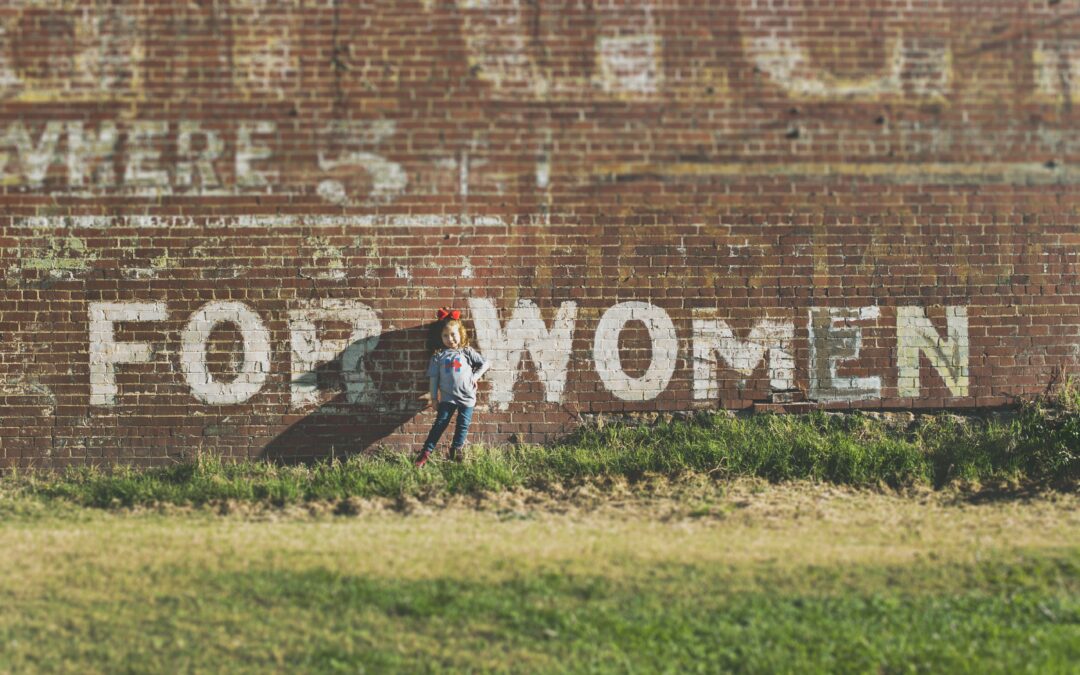
Women’s month brings to mind all the negatives: gender-based violence, intimate partner violence, physical, emotional and sexual abuse.
But, says Henda van der Merwe, director of CMR Gauteng-Oos, from our perspective we see women as mothers, caregivers, nurturers, and much more. And much of our support to women is aimed at empowering women with emotional as well as practical support.
As a child and family social work organisation, we know very well that the wellness of our children rests in large part on the role of mothers in our society.
A woman is the sum total of many roles: partner, mother, caregiver and in so many instances also the sole breadwinner. And in many of the areas we work in, mothers go out to work while grannies have to step in to look after the young ones. “A woman’s work is never done, they say.” It is so true.
As one work-from-home mom says when she packs up to go home: “Now I am going to my other job.”
“Let us remember during this month all those mothers who care for children not their own: Foster mothers, grannies, adoptive mothers, and all others who step in to care for children. Their formation is of the essence; and in fact, the contribution mothers make life on in perpetuity.”
Van der Merwe points out that CMR Gauteng-Oos rendered services to 2 324 women and 2 769 children last year.
“Mothers, we salute you.”
by CMR@dmin | Jul 6, 2022 | Support
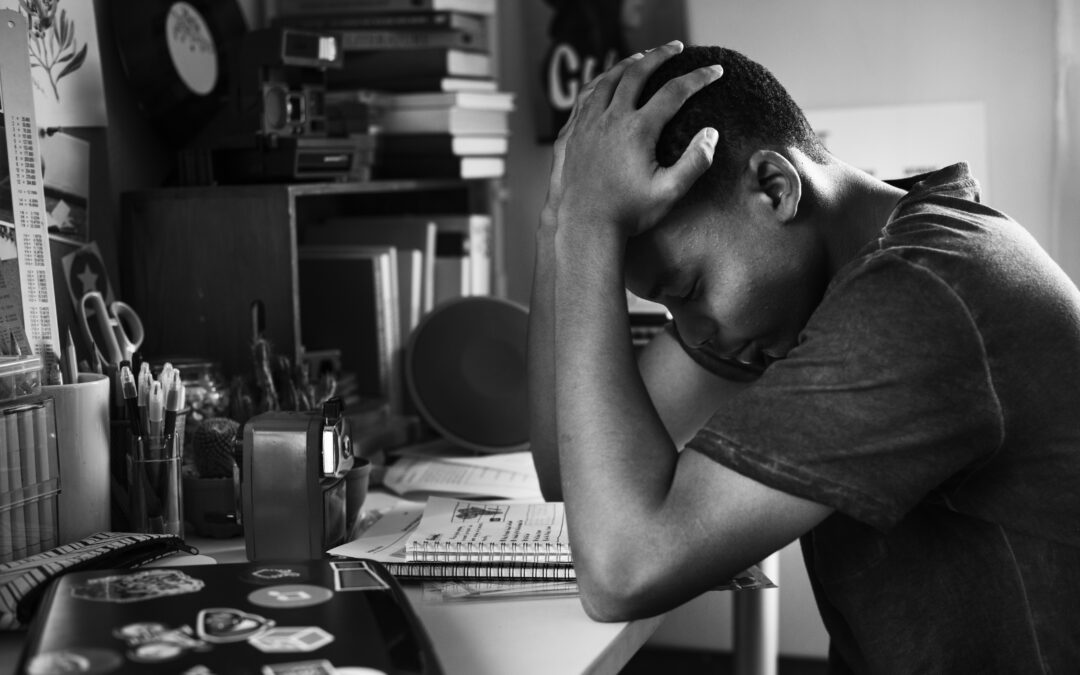
The past two years have seen a sharp rise in teenage suicide globally.
No words could ever adequately describe a parent’s devastation upon the suicide of a child. This grief cuts way deeper than that of a death caused by illness. More often than not the warning signs were there – but were misinterpreted or not attended to.
The past two years have seen a sharp rise in teenage suicide globally. This can, in part, be directly attributed to the worldwide actions by governments because of the COVID-19 virus. Locked down, children of all ages have been denied natural growth stimulators, also emotionally. Teenagers strongly feel the burden of lack of personal interaction. And while technology has enabled schooling to continue, so much has been lost that this generation will probably become known by an epithet describing what they have lost in human terms.
Says Hanlie Boshoff, narrative therapist in Centurion: “Parents have become digitally distracted – we all have. But interaction and communication between parents and teenagers are still the mainstay of good emotional health.
Depression has become as common as toothache. The pandemic has exacerbated this as everyone felt depressed at least some of the time. But long-term depression which kicks in is different to a short-term feeling of “the blues”. And although things are ‘back to normal’ the effects will be with us for years to come. In teenagers, signs differ from that of adult depression.
“Research has shown that parents find it difficult to tell the difference between ‘ups and downs’ and teen depression that needs treatment. And even when parents may correctly identify it, many barriers such as access to treatment, financial difficulties and poor communication with the teen could prevent seeking help,” says Boshoff whose practice, Tiqvah, specialises in teenagers with challenges.
“One tell-tale sign in teenagers is their increased irritability. This commonly leads to impatience, disrespectful behaviour and defiance. Extreme reaction to criticism is another sign. And right at the end of the pendulum’s swing, is aggression. Monitor your teen’s response to risk-taking, criticism, and failure…. His reaction could tell you he is suffering from depression. Added to these signs could be social withdrawal or joining the wrong crowd. Both could be the first step towards problems like alcohol/substance abuse, even self-harm,” Boshoff points out.
Other symptoms to watch out for: feelings of hopelessness, loss of interest, tiredness, memory loss, sleeping problems and appetite loss. If the teen suffers from Major Depressive Disorder, suicidal thoughts, anxiety and panic disorder could further be part of the picture.
“Family units are under stress. Single parent families or children brought up by grannies, these realities are what we see in our society. But even traditional nuclear families are no longer devoid of these digital distractions. Stress also increases substance use (or abuse) which affects families. Out of control parents spell trouble all around,” explains Henda van der Merwe, director of CMR Gauteng-Oos, a social work NGO with 13 satellite offices across Pretoria.
Are we raising a mentally disturbed generation? The answer seems obvious. A recent South Africa study showed that around 17% of teenagers had contemplated suicide in the first six months of last year.
But all is not lost. Boshoff says families can prevent these problems from arising by following a few guidelines. Cutting down on screen time is the first rule. “Face-time is crucial. Make time to talk and connect every day. This is a time to connect, not to teach and criticise,” she stresses.
“Parents should lead by example – turn off your phone and encourage them to do the same when socialising or focusing on work. Encourage them to get involved in activities – as they start to re-engage they will feel better. Volunteer. Doing things for others is a powerful antidepressant and a self-esteem booster. Doing things together will be a great bonding experience and give them a sense of purpose. Your love, guidance and support can go a long way toward helping your teen overcome depression and get his life on track.”
Van der Merwe concludes: “Social workers deal with the results of unfocused parenting every day. Family units are falling apart, and children failing to reach their potential – we believe parents need more training and support to help them raise a healthy new generation. This means putting a stop to endless technological stimulation and giving your children personal attention and spending time with them.”

by CMR@dmin | Dec 21, 2021 | Support
Bright Christmas lights. Festive music everywhere, telling us to feel jolly and get into the festive spirit – because it’s Christmas.
For many, it is a time of family gatherings and despite the past two year’s crisis management of almost all life situations, the Christmas feeling is felt in shops already.
People really want to feel “normal” again, and it is understandable that they are reaching towards a feeling of togetherness and belonging – the very things we have been denied these past two years.
There are however thousands who are without family. Some of them live on the street. Their experience of Christmas does not include lights and trees. Their biggest hope is to have food every day. Many others may well not be living on the street, but they do not know where to go since they do not have a family to be with. During the pandemic, many people have lost loved ones, whose empty seats will be difficult to cope with.
Money problems, financial stress, joblessness. 2021’s stressors are worse than that of 2020. There is still uncertainty, especially now with the new developments around the virus.
And many stand alone. Loneliness can affect anyone, even small children. Think of a single mom who has no family, who struggles to engender a Christmas feeling in her home. Small children especially are drawn to the trees, lights and gifts in the shops. And mom does not have a festive bone in her body. In fact, the stress of the holiday season may mean she really does not look forward to this time of year.
Against this backdrop, things can go wrong. Children who do not understand, become demanding. And mom feels guilty, too. Thus loneliness gets its claws into her. And smaller children feel it too, especially only children.
“Loneliness goes hand in hand with the lack of a normal feeling of belonging. Everyone is exposed to this. Parents can also use alcohol or drugs as a remedy for loneliness – with negative effects on the children. A parent who is under the influence cannot behave properly, and this is one contributor to family violence,” explains Ani Grobbelaar, social worker of CMR Gauteng Oos’ Lyttelton branch.
“Then, of course, there is the problem of parents working while the children are on holiday. Children left home alone without supervision causes their own problems. Older children go walking around and if you look for trouble, you will find it. Apart from the safety aspect, there is also boredom. No child can watch TV for 8 hours without becoming bored. They start looking for something to do, and drugs, alcohol, porn and online games easily fill this gap. Parents must do everything in their power to find alternatives to keep children from these bad influences.
“Not just violence but also child neglect increase during this time,” explains Henda van der Merwe, director of CMR Gauteng-Oos. “For us, there is no doubt that family violence will see a sharp increase in the coming weeks. At the end of two years of the global pandemic, we should not forget that the emotional toll of that still plays a role in families. Most people just want to forget that it happened, but we must remember that more than 30 % of our country’s people are jobless. The stress is bigger than in other years.
“The social workers in our organisation are confronted with much more than the need for food. Family support is of the utmost importance during the festive season,” she explains.
The question is how to handle it? There is no easy answer. “Stop. Think. How can what you do in the next 5 minutes, help another person through this period? Can a few minutes of your caring perhaps change his experience – and stop him from grabbing onto something to help him feel better. To care is to give – a few minutes could change a person’s life irrevocably,” Van der Merwe concludes.

Recent Comments