When *Tshepiso was eight years old, she learned that home could disappear overnight.
After her mother passed away, she moved into her aunt’s small house. The adults around her tried their best, but life often felt uncertain. Some days there was laughter around the table. Other days there were arguments, silence, and fear. Tshepiso carried a question inside her that no child should have to ask: Where do I truly belong?
As she grew older, she moved in with her sister and her sister’s boyfriend. At first, things seemed better. But slowly, the house became filled with shouting and violence. At night, Tshepiso lay awake listening to doors slam and angry voices echo through the walls. The fear followed her to school, where she had once been known as one of the brightest learners in her grade.
She dreamed of becoming a doctor. Science had once excited her, and teachers believed she had a promising future. But trauma is heavy, especially for a child carrying it alone. Her marks dropped, her confidence disappeared, and she failed Grade 10.
For a long time, Tshepiso believed failure meant she was no longer intelligent. She did not yet understand that pain can silence even the strongest mind.
One Sunday evening changed everything.
After returning from a leadership camp where she had proudly represented her school, Tshepiso arrived home to chaos. Her sister’s boyfriend shouted at her to leave and told her she would not sleep there that night. Frightened and heartbroken, she stood outside behind the house with nowhere to go.
In desperation, she called her social worker from CMR Gauteng East at the time.
Although it was late on a Sunday, her social worker came immediately.
That moment stayed with Tshepiso forever. Not because someone solved all her problems instantly, but because, for the first time in years, an adult made her feel safe. Someone listened. Someone came for her. Someone decided she mattered.
Tshepiso returned to stay with her aunt, and slowly, hope began rebuilding itself inside her. She repeated Grade 10 and changed her subjects, believing her original dream was gone. Yet she refused to stop trying.
Step by step, she focused on school again.
In 2020, she completed matric and achieved first position at her school. The girl who once believed she had failed at life suddenly remembered who she was. Opportunities followed as she was accepted at university with the help of another social worker, from CMR Gauteng East at the time, establishing a growing belief that her story was not ending in pain.
At the University of Johannesburg, Tshepiso studied social work. She worked hard and excelled academically, but more importantly, she discovered purpose. She wanted to become the kind of person who had once rescued her – a social worker who showed up when she as a child felt abandoned.
Years later, Tshepiso graduated.
Today, she works at one of the offices of the same organisation, CMR Gauteng East, that once protected her as a vulnerable child. Every day, she sits across from children carrying fear, grief, and uncertainty, and she reminds them gently that pain is not the end of their story.
Because she knows something they do not yet understand: That sometimes the child who survives the storm becomes the person who helps others find shelter.
“It is time for all of us to act like activists and stop the silence surrounding violence against women and children,” says Henda van der Merwe, director of CMR Gauteng East.
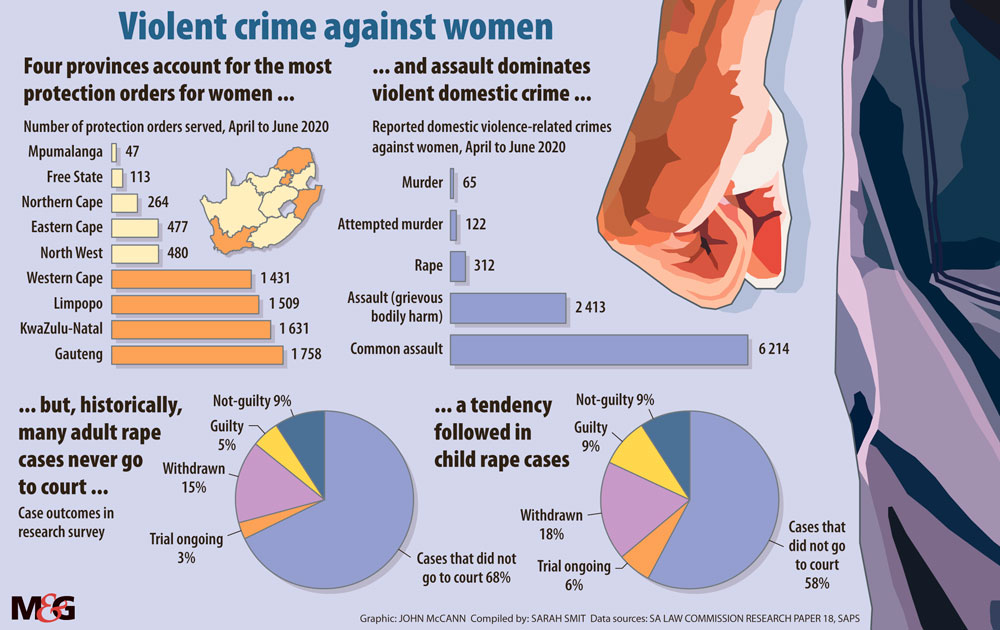
“Abusers should be reported and be made to own up to their unacceptable behaviour. We must stop protecting them by remaining silent. Crime statistics hardly ever shows a downward trend and considering that in a three-month period this year, 65 women were murdered in South Africa and another 122 almost killed in attempted murders; nothing about abuse is acceptable. Not even that which seems innocuous, like incessant teasing.”
Gender violence starts in the home – or a relationship. Women should learn to identify abusive behaviour right from the start of a relationship – and walk away. “Let us take note that 1 758 protection orders were served from April to June this year in Gauteng alone. Usually by the time a woman gets to this point the partner abuse has been ongoing for a long time – most probably years.
“Community members should remember that silence implies complicity… and that abuse is a crime. But be careful,” she cautions. Reach out to the victim first, if possible. Be supportive and sensitive. Try to discuss the problem – but most of all, listen. Do not be scared to reach out and help someone in distress. We should care enough to become part of the solution.
“It is important to teach children gender roles, and that it does not mean submission of one partner to the other, but rather equality of respect and treatment by others. Part of this would be to take measures to protect children from harmful influences by the media – television, social media and in particular, porn sites on the internet accessible from their cellphones.
Van der Merwe concludes that there is a myriad of causes and contributory factors, among them socio-economic factors notably unemployment, that play a role in gender abuse. The greatest factor is probably gender roles – in many cultures the woman is seen as having to submit. “But even this does not excuse abuse,” she says.
Intimate Partner Violence (IPV) is everybody’s business – a societal scourge our social workers deal with on a daily basis, says Henda van der Merwe, director of CMR Gauteng East.
Our country’s statistics of women murdered by their partners put us in the first place in the world – double that of the US – a shameful fact indeed. “During the lockdown many crime stats have declined, but we have no way of knowing how many partners have been abused (physically, emotionally, sexually) during this time.
Being confined in the home means a heightened stress level, anxiety, depression and for some even a flare up of Post Traumatic Stress Disorder symptoms.
“If a partner is abusive, he most likely became worse over the past couple of weeks. We must not forget that men can also be the victims, as it works both ways. Yet in our country, it is likely the women who are the victims.”
If you are aware of partner abuse/violence, the right thing to do would be to report it at the SAPS and get help from a reliable community resource (like CMR).
Many women feel they do not get help, according to the Domestic Violence Act, the police officer must adhere to certain protocol. Free legal advise can be obtained from The Warrior Project.
This problem is closely linked to poverty, mental illness, poor childhood development and places a burden on our healthcare system as abused individuals are twice as likely to need repeated physical and mental help.
“Our reality is that partner abuse forms part of certain cultural and social norms, which either condone or condemn these practices. Human Rights and our country’s laws however, do not allow for this and individuals are strongly advised to seek help. Social workers are able to help with referrals, places of safety and to assist with a safety plan where a person has to continue living in the circumstances.
“This abuse affects everyone in the home and children pay the price. This also plays into a vicious cycle of abusers who in turn abuse,” says van der Merwe.
“Our social workers have been extremely busy during this time. I am convinced that the spill-over will still be with us for months to come,” she concludes.
Those in need of help can contact their closest CMR, Child Welfare, FAMSA or Department of Social Development Office.

Recent Comments